Calm & consistent
LP positioning
for infants
LP Comfort Seat™ supports clinicians performing lumbar puncture in newborns and young infants (0 to 8 months) by helping teams achieve consistent positioning with less manual stabilisation, across mixed teams and high-pressure environments.
Consistent Positioning | First-Pass Confidence
Positioning consistency in
high-pressure workflows
Lumbar puncture in newborns and young infants is routine, but operationally demanding. Outcomes vary widely by setting and experience level. Published evidence often cites baseline first-pass success around 50 to 60 percent, and repeat attempts can approach 40 percent in some real-world settings.
The most practical lever teams can control is positioning and stabilisation consistency.
Workflow Friction
When positioning is inconsistent, procedures take longer, handling burden increases, and the experience becomes tougher for staff and families.
Leading to repeat attempts, unusable samples, and escalation pathways
Baseline infant LP success in published clinical evidence
Workflow consistency through ergonomic design
LP Comfort Seat™ is a patent-pending positioning system designed specifically for newborns and young infant anatomy (0 to 8 months). Supporting stable, repeatable positioning while reducing the need for continuous manual stabilisation, it helps teams deliver a more consistent set-up across clinicians and shifts.
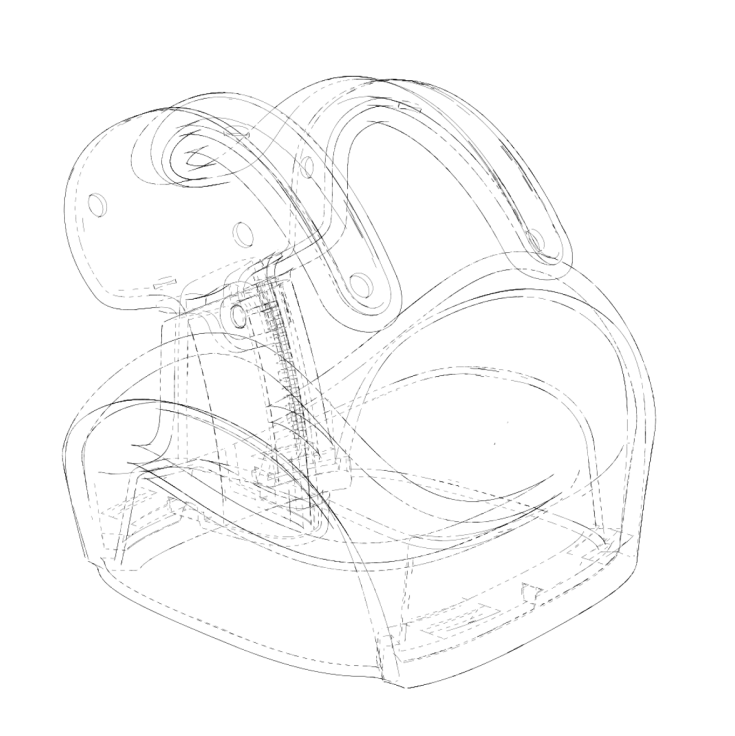
Tailored For Infant Anatomy
Smooth, supportive contours are shaped to encourage natural infant positioning in the 0 to 8 month age band. The result is a calmer, more stable set-up that helps teams repeat the same positioning approach across different clinicians and environments.


Designed for paediatric emergency departments, used across units
Infant LP volume is highest in Paediatric Emergency Departments, where urgency, mixed teams, and interruptions make repeatability essential. LP Comfort Seat is designed to meet ED realities, while also fitting NICU, PICU, and inpatient ward workflows.

Why ED/ER Matters
Urgent, Non-Elective Volume
Procedures performed when clinicians need answers quickly. Often to rule out or confirm serious infection in very young infants.
High-Pressure Workflow
Fast-paced, interruption-heavy environment. Success influenced by speed, team coordination, and positioning consistency despite varied experience.
Mixed teams, shifting roles
Positioning workflow shared across physicians, nurses, and supporting staff. A repeatable set-up helps when responsibility moves between clinicians.
Most common location for paediatric LP procedures. High-volume setting where consistency and speed matter.
A large share of infant LP demand sits within 0 to 8 months. LP Comfort Seat's primary clinical focus.
What teams look for
- Clear reduction in staff handling burden
- A set-up that feels repeatable within minutes
- Confidence across mixed teams and shifts
- Low-friction cleaning, storage, and training
What teams look for
- Clear reduction in staff handling burden
- A set-up that feels repeatable within minutes
- Confidence across mixed teams and shifts
- Low-friction cleaning, storage, and training
Common questions before adoption
- Is this meaningfully better than our current approach
- How it fits cleaning and reprocessing routines
- Storage footprint in space-limited units
- Purchasing pathway, approvals, and timelines

What matters to clinicians and
procurement teams
LP Comfort Seat™ is designed to support more consistent clinical setup for newborns and young infants while also fitting the practical review criteria hospitals use when assessing adoption.
Practical Requirements
What hospitals will review
Cost And Purchasing Pathways
How the device is classified, reviewed, and purchased within your hospital can shape approval speed and implementation ease.
Training And Onboarding
How quickly mixed teams can use it confidently, including rotating staff, shift changes, and escalation support.
Cleaning & Reprocessing
How well the device fits infection control expectations and practical cleaning routines already used in the unit.
Storage And Durability
Whether the device is easy to store, easy to handle, and durable enough for routine use in busy environments.
Clinical Impact
What teams are aiming to improve
Faster, Consistent Setup
Repeatable positioning for newborns and young infants across clinicians, shifts, and care environments.
Reduced Handling Burden
Less reliance on continuous manual stabilisation during setup, helping teams stay focused on the procedure.
Smoother Procedure Flow
A more controlled, repeatable workflow in time sensitive settings with mixed teams and interruptions.
Review Ready Consistency
A clearer setup pathway with less variability, making local evaluation and hospital review easier.

How LP Comfort Seat™ fits alongside current practice
LP Comfort Seat™ supports newborn and young infant lumbar puncture with a more structured setup. If a dedicated infant LP positioning support is already in use, compare: repeatability, airway access, rapid release, cleaning fit and design & manufacturing quality.
Many teams rely on pillows, towels, rolled blankets, or assistant stabilisation. These methods can work, but results can vary by person, shift, and available support. LP Comfort Seat™ provides a more repeatable set up designed for infant anatomy & busy unit workflows.
Designed for real units with real constraints

What It Does Well
Supports repeatable positioning for newborns and young infants (0 to 8 months) and helps reduce reliance on continuous manual stabilisation during set up. It is designed to support consistency across mixed teams, shift changes, and high pressure environments where variability can be difficult to control.

What You Should Plan For
As with any unit device, practical fit matters. Cleaning routines, storage location, and a simple onboarding approach are usually the first considerations. We provide quick start guidance and a short evaluation framework so teams can assess fit without adding administrative burden.


Where It Fits Best
High throughput and time sensitive settings where repeatability and team variation are common. This includes Paediatric Emergency Departments, NICU, PICU, and inpatient units where multiple clinicians may be involved and consistent set up supports confidence.

What Can Slow Adoption
If workarounds are seen as sufficient, or if purchasing pathways are slow. Early clarity on cleaning and infection control alignment, training time, and review requirements helps reduce friction. Evidence and a low effort evaluation process are typically the factors that move decisions forward.

Clinical trials underway
LP Comfort Seat™ clinical trials are currently underway, scheduled for completion toward the end of Q2’ 2026 . All results will be made publicly accessible upon trial completion, right here on lpcomfortseat.com. Targeted results should show improved first pass success, fewer repeat attempts, and a more consistent set up across mixed teams and busy clinical environments. If your unit would like to review assess fit locally, we would welcome a short demo.